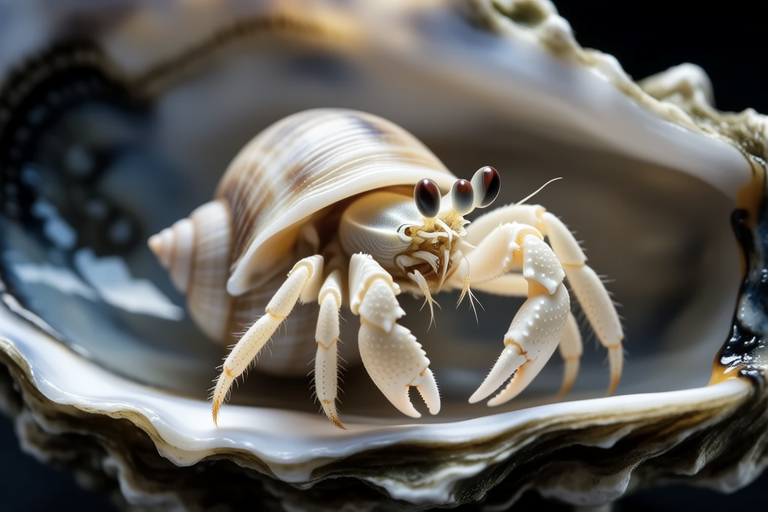
The Fascinating World of Pea Crabs
Welcome to the enchanting world of pea crabs, tiny crustaceans that have captured the imagination of scientists and nature enthusiasts alike. These minuscule creatures live within the confines of their hosts, engaging in intricate symbiotic relationships that are both fascinating and vital to marine ecosystems. Let’s dive into the microscopic universe of pea crabs, exploring their anatomy, behavior, reproduction methods, and their role in marine life.
Microscopic Size and Anatomy
Pea crabs, belonging to the family Pinnotheridae, are some of the smallest crabs in the world, often measuring less than a centimeter in length. Their diminutive size allows them to reside comfortably inside the bodies of larger marine organisms without causing harm. Despite their small stature, pea crabs possess all the essential features of a crab, including two large compound eyes, a robust exoskeleton, and five pairs of legs.
One of the most striking features of pea crabs is their ability to change color and texture to blend seamlessly with their hosts. This camouflage not only helps them avoid predators but also ensures they remain inconspicuous within their host’s body. Additionally, pea crabs have adapted to live in the cramped spaces within their hosts by developing flattened bodies and flexible joints, allowing them to maneuver through narrow passages.
Symbiotic Relationships
Pea crabs are known for their parasitic-commensalistic relationship with various marine animals, primarily sea cucumbers and bivalves such as oysters, mussels, and scallops. While these relationships may seem one-sided at first glance, they are actually mutually beneficial for both parties involved. The pea crabs receive protection, food, and shelter from their hosts, while the hosts gain nutrients from the waste products produced by the crabs.
In the case of sea cucumbers, pea crabs can be found nestled within their coelomic cavity, where they feed on the host’s internal organs and other organic matter. Interestingly, sea cucumbers have developed a tolerance for these tiny invaders, recognizing them as part of their natural ecosystem. For bivalves, pea crabs reside within the mantle cavity, where they consume plankton and detritus filtered by the host. This arrangement benefits both the crab and the bivalve, as the crab helps clean the host’s filtering system, enhancing its efficiency.
Reproduction Methods
The reproductive cycle of pea crabs is as intriguing as their symbiotic relationships. Mating typically occurs when the female crab is ready to molt, a process during which her exoskeleton becomes soft and vulnerable. During this time, the male crab fertilizes her eggs externally. After mating, the female carries the fertilized eggs under her abdomen until they hatch. Once hatched, the larvae disperse into the water column, where they undergo several molts before settling onto a suitable host.
Recent studies have shed light on the complexities of pea crab reproduction. Researchers have discovered that certain environmental factors, such as temperature and salinity, can influence the timing and success of reproduction. For instance, warmer waters may accelerate the development of larvae, while lower salinity levels can hinder their growth. Understanding these factors is crucial for conservation efforts aimed at protecting pea crabs and their hosts.
Contributions to Marine Ecosystems
Pea crabs play a significant role in marine ecosystems by contributing to nutrient cycling and biodiversity. As filter feeders, they help maintain the health of their hosts by removing harmful bacteria and excess organic matter. This process not only benefits the individual host but also contributes to the overall health of the surrounding environment.
Moreover, pea crabs serve as a food source for various marine predators, including fish, birds, and larger crustaceans. By supporting a diverse range of species, pea crabs help sustain the delicate balance of marine ecosystems. Additionally, their presence within their hosts can indicate the overall health of the ecosystem, as declines in pea crab populations may signal broader environmental issues.
Adaptations and Behavior
Pea crabs have evolved remarkable adaptations to thrive in their unique living conditions. Their flattened bodies and flexible joints allow them to navigate the confined spaces within their hosts, while their ability to change color and texture helps them blend in with their surroundings. Furthermore, pea crabs have developed specialized mouthparts that enable them to extract nutrients from their hosts efficiently.
In terms of behavior, pea crabs are generally non-aggressive and peaceful, coexisting harmoniously with their hosts. They spend most of their lives within the safety of their hosts, emerging only to mate or find new hosts if necessary. However, some species of pea crabs have been observed engaging in territorial disputes over prime nesting sites within their hosts.
Recent Scientific Discoveries
Advancements in technology and research methodologies have led to numerous breakthroughs in our understanding of pea crabs. Scientists have used advanced imaging techniques to study the internal structures of pea crabs and their hosts, providing valuable insights into their anatomy and physiology. Additionally, genetic analysis has revealed the evolutionary relationships between different species of pea crabs and their hosts, shedding light on the origins of their symbiotic relationships.
One of the most exciting developments in pea crab research involves the potential application of their symbiotic relationships in biotechnology. Researchers are exploring ways to harness the cleaning abilities of pea crabs to develop more efficient filtration systems for aquaculture and wastewater treatment. Furthermore, studies are being conducted to determine whether pea crabs could be used as bioindicators to monitor the health of marine environments.
Conclusion
The world of pea crabs is a testament to the wonders of nature and the intricate relationships that exist within marine ecosystems. From their microscopic size and unique anatomy to their symbiotic relationships and contributions to nutrient cycling, pea crabs offer a glimpse into the complexity and beauty of the underwater world. As we continue to explore and understand these fascinating creatures, we gain valuable insights into the delicate balance that sustains life in the oceans.
