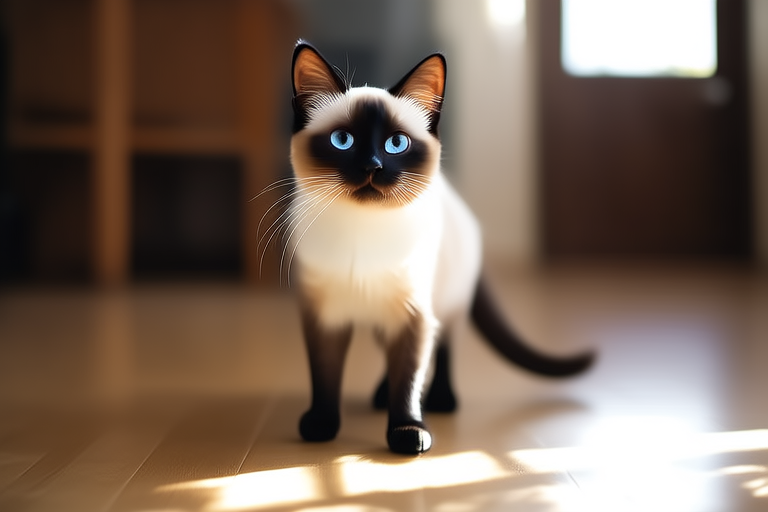
The Talkative Tails: Understanding the Vocal Nature of Siamese Cats
Siamese cats are often described as talkative, and for good reason. These elegant felines are known for their distinctive vocalizations, which set them apart from many other cat breeds. Their ability to communicate through a wide range of sounds has earned them a reputation as some of the chattiest pets in the world. This article delves into the unique vocal characteristics of Siamese cats, exploring the science behind their communicative behavior and offering tips for understanding and responding to their vocal cues.
The Unique Vocal Characteristics of Siamese Cats
Siamese cats are renowned for their melodic voices, often described as chirping, trilling, or even singing. Their vocal repertoire includes a variety of tones and pitches, from soft meows to loud, drawn-out cries. Unlike many other cat breeds that tend to be more silent, Siamese cats seem to enjoy engaging in conversations with their human companions. This vocal nature is one of the most charming and endearing qualities of the breed, making them beloved by many cat enthusiasts.
Why Are They Called ‘Talkative’? Scientific Insights
The term ‘talkative’ when applied to Siamese cats refers to their frequent and varied vocalizations. From a scientific perspective, these vocalizations serve multiple purposes. Firstly, they act as a means of communication, allowing the cat to express its needs, emotions, and desires. Secondly, these sounds can also serve as a form of social bonding. Research suggests that Siamese cats vocalize more frequently because of their genetic predisposition. Studies have shown that certain breeds of cats, including Siamese, have a higher frequency of vocalization due to selective breeding practices aimed at enhancing their communication abilities.
Additionally, Siamese cats are highly intelligent and inquisitive animals. Their need to interact with their environment and their owners drives them to vocalize more often. The breed’s history of being kept as companion animals, rather than for hunting, may have contributed to their tendency to engage in conversation with humans. This social interaction is crucial for their emotional well-being and helps to strengthen the bond between the cat and its owner.
Anecdotes and Examples of Vocal Interactions
Many Siamese cat owners can attest to the frequent and sometimes elaborate vocal exchanges they share with their pets. For instance, Sarah, a long-time Siamese cat owner, recounts how her cat, Luna, would wake her up every morning with a series of soft chirps. “It’s like she’s saying, ‘Good morning, it’s time to start the day!'” Sarah says. Another common scenario involves the cat demanding attention or food. Emily, another owner, describes her cat, Max, who would meow insistently until he was given a treat. “Max has his own special ‘I’m hungry’ sound,” she explains. “Once you learn to recognize it, it’s pretty unmistakable.”
These vocal interactions are not just random; they are purposeful and meaningful. Siamese cats use different sounds to convey different messages. A high-pitched trill might indicate excitement or playfulness, while a low, drawn-out meow could signal distress or discomfort. Understanding these vocal cues can help owners provide better care and respond appropriately to their cat’s needs.
Tips for Understanding and Responding to Vocal Cues
Living with a Siamese cat can be a delightful experience, but it requires a bit of patience and understanding. Here are some tips for owners to help them interpret and respond to their cat’s vocalizations:
- Learn the Sounds: Each Siamese cat has its own unique vocal signature. Spend time observing your cat and try to identify what different sounds mean. Pay attention to the pitch, volume, and context of each vocalization.
- Respond Appropriately: Once you’ve identified the meaning behind a particular sound, respond accordingly. If your cat is asking for attention, spend some quality time playing or petting. If it’s signaling hunger, prepare a meal. Positive reinforcement can encourage desired behaviors.
- Establish a Routine: Predictability can reduce stress and unnecessary vocalizations. Establish a consistent daily routine for feeding, playtime, and bedtime. This can help your Siamese cat feel secure and less likely to vocalize out of anxiety.
- Use Positive Reinforcement: Reward your cat for quiet, calm behavior. This can include treats, praise, or playtime. Over time, this will teach your cat that being quiet is beneficial.
The Enriching Experience of Living with a Siamese Cat
Living with a Siamese cat is more than just having a pet; it’s about forming a deep, meaningful bond. These cats are incredibly affectionate and thrive on human interaction. Their vocal nature makes them excellent communicators, and understanding their language can enhance the relationship between cat and owner. By learning to interpret their vocal cues, owners can provide better care and ensure their Siamese cat is happy and healthy.
The bond formed through understanding their vocal language is enriching. It’s a two-way street where both parties learn to communicate effectively. This connection can lead to a lifetime of companionship and joy. Whether it’s through the early morning chirps, the playful trills during playtime, or the comforting purrs when cuddling, the vocal interactions with a Siamese cat are truly special.
In conclusion, the talkative nature of Siamese cats is a testament to their intelligence, sociability, and desire for interaction. By understanding and responding to their vocal cues, owners can foster a strong, loving bond with their feline companions. The experience of living with a Siamese cat is rewarding, filled with moments of joy, laughter, and deep affection. Embrace the chatter, and you’ll find yourself enriched by the presence of this remarkable breed.
