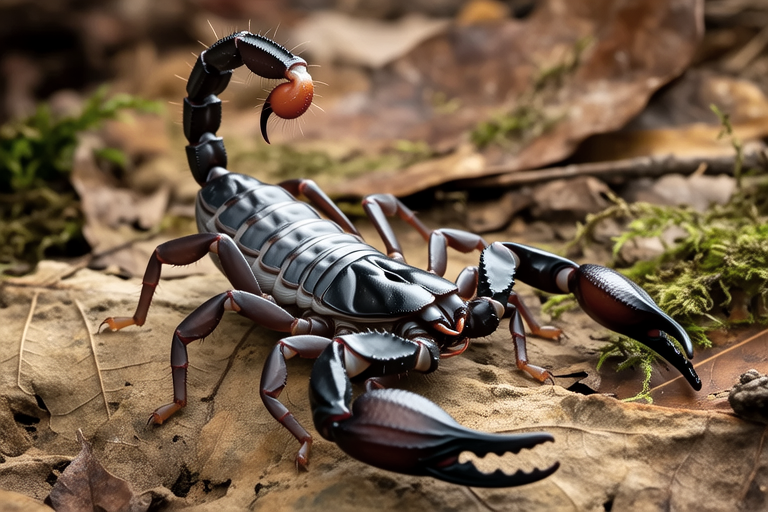
The Unique World of Heterometrus Spinifer: A Spiky Marvel of the Spider Kingdom
Among the diverse tapestry of arachnids that grace our planet, one species stands out for its distinctive appearance and intriguing behaviors: Heterometrus spinifer. This fascinating creature, often referred to as the spiny forest scorpion, captivates both scientists and nature enthusiasts alike with its unique physical characteristics, particularly its spiky features. Let’s delve into the world of Heterometrus spinifer, exploring its habitat, diet, behavior, and ecological significance.
A Physically Distinctive Arachnid
At first glance, Heterometrus spinifer is unmistakable due to its spiky exoskeleton, which serves multiple purposes. These spikes are not merely decorative; they play a crucial role in the spider’s survival. The spikes are primarily found along the back, giving the arachnid a formidable and intimidating appearance. They act as a defense mechanism against potential predators, making the spider less appealing as prey. Additionally, these spikes assist in anchoring the spider when climbing surfaces or burrowing into the ground.
Compared to its close relatives, such as Heterometrus laoticus and Heterometrus longimanus, Heterometrus spinifer boasts a more pronounced and densely packed array of spikes. While other species within the genus Heterometrus may have some degree of spikiness, Heterometrus spinifer‘s spikes are more numerous and sharper, setting it apart from its cousins.
Natural Habitat and Distribution
Heterometrus spinifer is predominantly found in tropical and subtropical regions across Southeast Asia, including countries like Thailand, Malaysia, and Indonesia. It thrives in humid environments such as dense forests, caves, and rocky terrains. The spider prefers areas with high humidity levels, where it can find shelter and ample food sources.
The spider’s choice of habitat is closely linked to its physical attributes. Its spiky exoskeleton helps it navigate through dense vegetation and rocky crevices. In these environments, the spikes provide additional traction and protection, allowing the spider to move swiftly and securely.
Diet and Feeding Habits
Heterometrus spinifer is a carnivorous predator, feeding mainly on insects and small vertebrates. Its diet includes a wide range of prey, from ants and beetles to frogs and lizards. The spider uses its powerful pincers to catch and subdue its victims before injecting venom through its fangs. The venom is potent enough to immobilize the prey quickly, ensuring a safe meal for the spider.
Interestingly, Heterometrus spinifer
