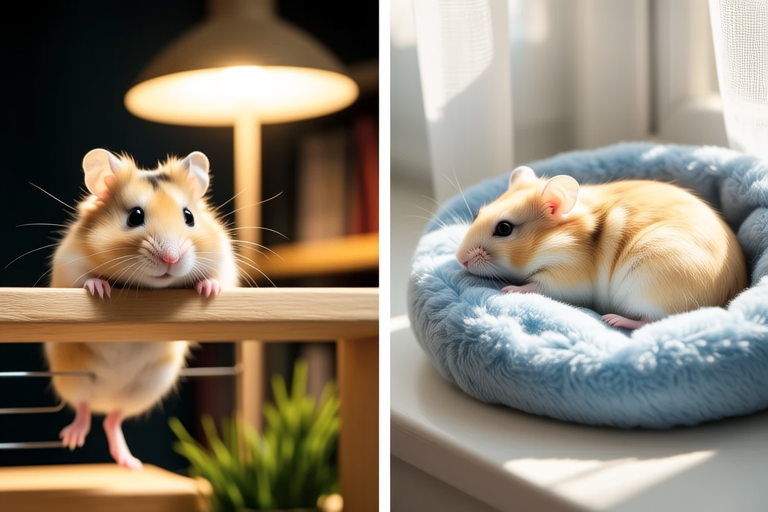
From Nighttime Explorer to Daytime Snuggler: Understanding Your Golden Hamster’s Behavior
Welcome to the fascinating world of golden hamsters! These small, adorable creatures have captured the hearts of many pet owners with their unique behaviors and charming personalities. However, understanding the nuances of their lifestyle is key to providing them with the care they need and deserve. In this article, we will explore the nocturnal nature of golden hamsters and how their behavior changes during the day. We’ll also provide tips for owners on how to best interact with their pets based on these behavioral patterns.
The Nocturnal Nature of Golden Hamsters
Golden hamsters are primarily nocturnal animals, meaning they are most active during the night. This behavior stems from their origins in the Syrian desert, where they evolved to avoid the harsh midday heat by being active during cooler nighttime hours. As a result, golden hamsters tend to sleep during the day and become more alert and energetic when the sun sets.
During their active nighttime period, golden hamsters engage in a variety of activities. They run on exercise wheels, explore their habitats, and search for food. Their natural instinct to burrow and hide can be observed as they create cozy nests and tunnels within their living spaces. Understanding these behaviors is crucial for owners who wish to provide a stimulating and enriching environment for their pets.
Daytime Preferences and Quiet Moments
While golden hamsters are busy explorers at night, they prefer a quieter existence during the day. During these periods, they typically retreat to their nests to rest and conserve energy. Owners may notice their hamsters sleeping soundly, often curled up in a ball or tucked into a cozy corner of their habitat.
It’s important for owners to respect their hamsters’ need for rest during the day. Disturbing them during this time can lead to stress and disrupt their natural circadian rhythms. Instead, owners can focus on interacting with their hamsters during their more active nighttime hours, when they are more likely to enjoy playtime and exploration.
Tips for Interacting with Your Golden Hamster
To build a strong bond with your golden hamster, it’s essential to understand their activity levels and preferences. Here are some tips for interacting with your pet based on their behavioral patterns:
- Respect Their Sleep Schedule: Avoid handling your hamster during their daytime rest periods. Instead, plan playtime and interaction sessions for when they are naturally awake and active.
- Create a Stimulating Environment: Provide toys, tunnels, and other accessories that encourage exploration and mental stimulation. Exercise wheels and climbing structures can help keep your hamster physically active and entertained during their nighttime adventures.
- Establish a Routine: Golden hamsters thrive on routine. Try to maintain consistent feeding and interaction times to help regulate their sleep-wake cycles.
- Use Soft Lighting: If you need to check on your hamster during their rest period, use soft, indirect lighting to minimize disturbance.
Common Activities at Night
At night, golden hamsters engage in various activities that mimic their natural behaviors in the wild. Some of the most common activities include:
- Running on Wheels: Hamsters are known for their love of running, which helps them burn off excess energy and maintain good physical health. Ensure that the wheel is large enough (at least 8 inches in diameter) to prevent injury and promote proper running posture.
- Exploring Their Habitat: Providing a spacious cage with multiple levels and hiding spots can encourage your hamster to explore and investigate their surroundings.
- Foraging: Hide treats and food around the cage to stimulate their natural foraging instincts. This can also help prevent boredom and provide mental enrichment.
- Burrowing: Golden hamsters love to dig and create tunnels. Offer safe materials like shredded paper or hay for burrowing activities.
Creating a Suitable Environment
Providing a suitable environment for your golden hamster is essential for their overall well-being. The following guidelines can help ensure that your hamster has a comfortable space for both active and rest periods:
- Proper Housing: A spacious cage with multiple levels and plenty of ventilation is ideal. The cage should be large enough to accommodate all necessary accessories, including bedding, toys, and food and water dishes.
- Bedding and Nesting Materials: Use soft, absorbent bedding like shredded paper or aspen shavings to line the bottom of the cage. Provide additional nesting materials like tissue paper or cotton balls for your hamster to create cozy nests.
- Temperature Control: Maintain a temperature range of 65-75°F (18-24°C) to ensure your hamster remains comfortable year-round. Avoid placing the cage in direct sunlight or near drafts.
- Noise and Light: Keep the area around the cage quiet and dimly lit during the day to promote restful sleep. At night, reduce noise and light pollution to encourage activity and exploration.
The Importance of Understanding Hamster Behaviors
Understanding the behavioral patterns of your golden hamster is crucial for building a strong bond and ensuring their well-being. By respecting their nocturnal nature and providing a stimulating environment, you can help your pet thrive and enjoy a happy, healthy life. Remember, each hamster is unique, so it’s important to observe and adapt to your pet’s individual needs and preferences.
By following the tips outlined in this article, you can create a nurturing and enriching environment for your golden hamster. With patience, consistency, and a deep understanding of their behaviors, you’ll be able to build a strong, loving relationship with your furry friend.
