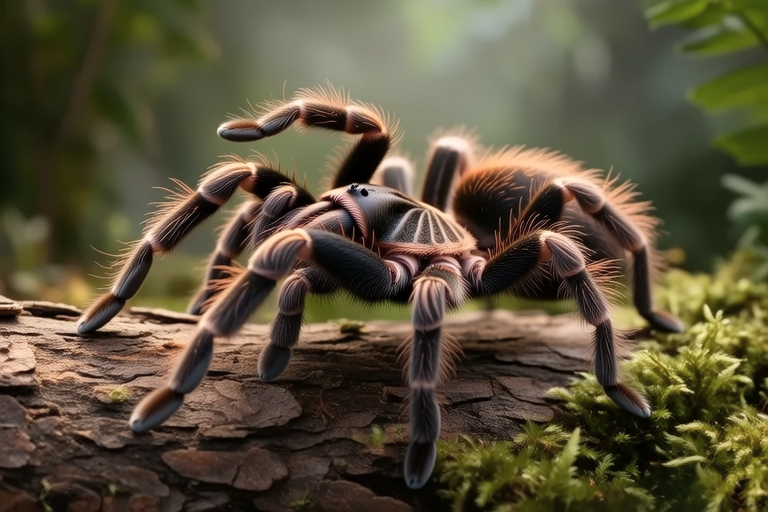
Tarantulas: Misconceptions and Fascinating Truths
Welcome to the captivating world of tarantulas! These misunderstood creatures have long been shrouded in myths and misconceptions. From their habitats to their diets and interactions with humans, there’s much more to these eight-legged wonders than meets the eye. Let’s delve into the truth behind these fascinating arachnids.
Habitat: More Than Just Deserts
Contrary to popular belief, tarantulas are not limited to desert environments. They inhabit a wide range of habitats across the globe, from tropical rainforests to grasslands and even coastal regions. In fact, some species thrive in lush, humid environments, such as the Amazon Rainforest. Arachnologist Dr. Emily Carter explains, “Tarantulas have adapted to various climates, showcasing remarkable resilience and versatility.” She adds, “One of my favorite encounters was in Costa Rica, where I observed a beautiful pinktoe tarantula in its natural habitat. It was a magical experience.”
Diet: Predatory Precision
Tarantulas are voracious predators, feeding primarily on insects, small mammals, and even birds. Their hunting techniques vary depending on the species. Some tarantulas ambush their prey, while others actively hunt. One particularly interesting method is the use of silk trip wires, which alert the spider to any movement nearby. Dr. Carter shares, “I once witnessed a tarantula patiently waiting near its burrow, sensing vibrations through its legs. As soon as a cricket passed by, it pounced with incredible speed and precision.”
Behavior: Social and Solitary
Despite their fearsome reputation, tarantulas exhibit a range of behaviors, from social to solitary. Many species are nocturnal, emerging at night to hunt and avoid predators. Some tarantulas live in communal burrows, sharing space with other spiders. However, most tarantulas prefer solitude, creating individual burrows or shelters. Dr. Carter notes, “Observing tarantulas in the wild is a rewarding experience. They’re not aggressive unless provoked, and their behavior is often quite peaceful.”
Interaction with Humans: Bites and Allergies
Tarantulas are generally harmless to humans. Their venom is mild, causing localized pain similar to a bee sting. However, individuals with allergies may experience more severe reactions. Dr. Carter emphasizes, “It’s important to handle tarantulas with care and respect. While they’re not dangerous, they can become defensive if threatened.” She recalls, “During one of my expeditions, I accidentally startled a tarantula, and it flicked off some hairs from its abdomen. The hairs caused a slight irritation, but nothing serious.”
Unique Adaptations: Camouflage and Defense Mechanisms
Tarantulas have evolved several remarkable adaptations to survive in their environments. Many species possess camouflage abilities, blending seamlessly with their surroundings. Additionally, tarantulas have developed defense mechanisms, such as flicking urticating hairs or biting when threatened. Dr. Carter highlights, “These adaptations showcase the ingenuity of nature. Tarantulas have found ways to protect themselves without relying solely on aggression.”
Myths Debunked: Separating Fact from Fiction
Let’s address some common misconceptions about tarantulas:
- Myth: Tarantulas are highly venomous. Fact: Most tarantulas have venom that’s only mildly toxic to humans.
- Myth: Tarantulas are aggressive and attack humans. Fact: Tarantulas are typically shy and will avoid confrontation.
- Myth: All tarantulas spin webs. Fact: Only a few tarantula species spin webs; most rely on ambush or active hunting.
Dr. Carter adds, “Understanding these myths is crucial for dispelling fear and fostering appreciation for tarantulas.”
Conservation Efforts: Protecting Tarantulas
Tarantulas face numerous threats, including habitat destruction, climate change, and illegal pet trade. Conservationists are working tirelessly to protect these creatures. Organizations like the Tarantula Preservation Group (TPG) raise awareness and promote responsible practices. Dr. Carter shares, “Conservation is essential for preserving biodiversity. By supporting these initiatives, we can ensure that future generations can marvel at the beauty of tarantulas.”
Conclusion: Embracing Tarantulas
Tarantulas are truly remarkable creatures, deserving of our admiration and respect. By understanding their habitats, diets, behaviors, and interactions with humans, we can appreciate the complexity and wonder of these arachnids. Let’s embrace the truth behind tarantulas and join the effort to conserve these fascinating animals for generations to come.
