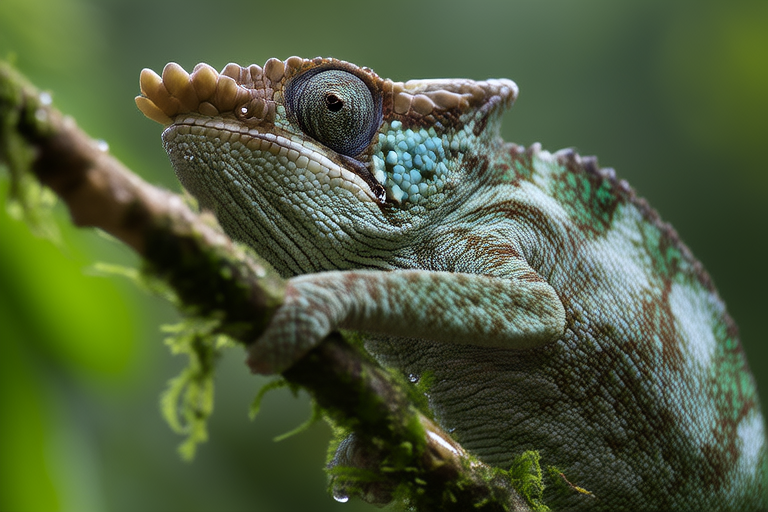
Unveiling the Mysterious World of Chameleons: Everything You Need to Know
Introduction:
Chameleons, those enigmatic reptiles, have captivated human imagination for centuries. Known for their remarkable ability to change colors, these creatures possess a unique set of characteristics that set them apart from other lizards. From their specialized feet to their long, sticky tongues, chameleons are fascinating beings that thrive in diverse environments across the globe. This article aims to unveil the mysterious world of chameleons, providing you with everything you need to know about these captivating animals.
Unique Characteristics of Chameleons
Color-Changing Abilities:
One of the most intriguing features of chameleons is their ability to change colors. Contrary to popular belief, this skill isn’t primarily used for camouflage but rather for communication, temperature regulation, and mood expression. The color-changing process occurs due to specialized cells called chromatophores, which contain pigments and reflect light. These cells expand or contract, altering the visible spectrum of light and thus changing the chameleon’s color.
Body Structure:
Chameleons have several adaptations that aid in their survival. Their eyes, which can move independently, allow them to scan their surroundings efficiently. Their feet, designed with two toes pointing forward and two pointing backward, provide excellent grip on branches. Additionally, their prehensile tails help them balance and move between perches. The most notable adaptation, however, is their long, sticky tongue, capable of extending up to twice the length of their bodies to catch prey.
Habitat Preferences:
Native to Africa, Madagascar, and parts of southern Europe, chameleons prefer warm, humid climates. They are arboreal, meaning they spend most of their lives in trees, and are often found in tropical rainforests, savannas, and mountainous regions. Some species can also be found in deserts and semi-desert areas, showcasing their adaptability to various environments.
Myths Versus Facts About Color-Changing Process
Myth: Chameleons change color to blend into their surroundings.
Fact: While chameleons can alter their appearance to match their environment, this is not always the primary reason. Instead, color changes serve multiple purposes, including regulating body temperature, signaling emotions, and attracting mates.
Scientific Explanation:
The color-changing mechanism involves three layers of skin cells: melanophores (containing black pigment), xanthophores (yellow), and iridophores (reflective). By manipulating the distribution of these pigments, chameleons can display a wide range of colors. For instance, when they feel threatened, they may turn darker to absorb more heat or appear larger, while during courtship, males might display vibrant hues to attract females.
Different Species of Chameleons
There are over 200 recognized species of chameleons, each with distinct characteristics. Below are some examples:
- Beechey’s Chameleon (Furcifer lateralis): Found in Madagascar, this small chameleon grows up to 8 inches in length. It has a brownish-green base color with yellow spots.
- Parson’s Chameleon (Calumma parsonii): One of the largest chameleon species, reaching lengths of up to 27 inches. Native to Madagascar, it is known for its striking green and yellow coloration.
- Panther Chameleon (Furcifer pardalis): Also from Madagascar, this species boasts vibrant colors ranging from red to blue, depending on its mood and location.
- Meller’s Chameleon (Trioceros melleri): Endemic to Tanzania, this large chameleon can grow up to 24 inches and has a distinctive horn-like protrusion on its snout.
Tips for Keeping Chameleons as Pets
If you’re considering adding a chameleon to your family, here are some essential tips:
Care:
Chameleons require specific care to thrive in captivity. They need a well-ventilated enclosure with appropriate lighting and temperature gradients. UVB lighting is crucial for calcium absorption and overall health. Maintain humidity levels between 50% and 70%, and ensure there are plenty of branches and plants for climbing and hiding.
Diet:
Chameleons are insectivorous, meaning their diet consists mainly of insects. Feed them crickets, mealworms, and wax moths, ensuring proper supplementation with vitamins and minerals. Offer live food daily, adjusting the quantity based on the chameleon’s age and size.
Housing Requirements:
Adequate housing is vital for a chameleon’s well-being. A minimum of 24x18x36 inches is recommended for juveniles, with larger enclosures for adults. Use non-toxic materials for substrate, and avoid overcrowding by providing ample space for movement and exploration.
Interesting Facts and Conservation Efforts
Facts:
Chameleons have a lifespan of 3 to 10 years, depending on the species. They lay eggs, with females digging burrows to bury them safely. Chameleons are solitary creatures, preferring to live alone except during mating season.
Conservation Efforts:
Due to habitat destruction, illegal pet trade, and climate change, many chameleon species face extinction threats. Organizations like the International Union for Conservation of Nature (IUCN) work tirelessly to protect these animals through research, education, and habitat preservation initiatives. Supporting local conservation projects and choosing captive-bred pets can significantly contribute to chameleon conservation.
In conclusion, chameleons are extraordinary creatures with unique abilities and behaviors that continue to fascinate us. By understanding their needs and respecting their natural habitats, we can ensure these magnificent animals remain part of our planet’s biodiversity for generations to come.
