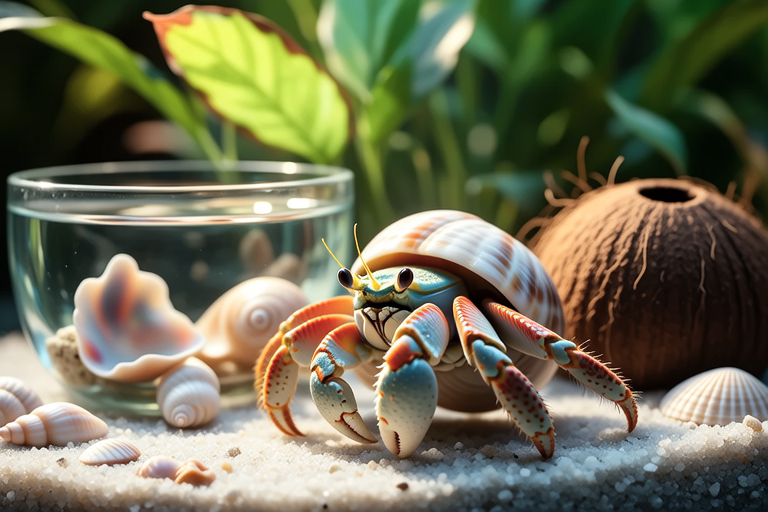
The Ultimate Checklist Before Bringing a Hermit Crab Into Your Home
Welcome to the wonderful world of hermit crabs! These fascinating creatures can make delightful pets, but they require specific care to thrive. Before you bring your new hermit crab home, it’s crucial to prepare adequately. This guide will walk you through everything you need to know to create a safe, comfortable environment for your new pet.
Setting Up the Right Habitat
Hermit crabs are terrestrial crustaceans that need a secure, spacious habitat to explore. Start by choosing an aquarium or a glass terrarium with a lid that allows for ventilation but prevents escapes. The enclosure should be at least 10 gallons for two crabs, with more space for additional hermit crabs.
Selecting Appropriate Substrate
The substrate is crucial for your hermit crab’s well-being. Opt for a mix of coconut fiber, play sand, and crushed coral. Avoid calcium-based sands as they can be harmful if ingested. Ensure the substrate is deep enough for your hermit crab to dig and burrow, which is essential for their health and happiness.
Ensuring Proper Temperature and Humidity Levels
Hermit crabs are tropical creatures and require a warm, humid environment. Maintain a temperature between 75°F and 85°F (24°C to 29°C) using a heat mat or under-tank heater. Use a hygrometer to monitor humidity levels, aiming for 70% to 80%. A humidifier or a fogger can help maintain the required moisture levels.
Choosing Suitable Decorations and Hiding Spots
Incorporate natural elements like driftwood, rocks, and seashells into your hermit crab’s habitat. These items provide climbing opportunities and hiding spots, which are vital for your pet’s mental stimulation and comfort. Ensure all decorations are clean and free of sharp edges that could harm your hermit crab.
Necessary Dietary Requirements
Your hermit crab’s diet should consist of a balanced mix of commercial hermit crab food, fruits, vegetables, and protein sources. Offer a variety of foods, including leafy greens, carrots, apples, and boiled eggs. Always provide fresh water in a shallow dish and ensure there’s always access to salt water, which is essential for their exoskeleton health.
Hygiene and Tank Maintenance Tips
Maintaining cleanliness is key to preventing diseases. Regularly clean the tank, replacing any soiled substrate and scrubbing the walls. Change the water daily and sanitize the dishes. Quarantine any new hermit crabs before introducing them to the existing population to prevent the spread of illnesses.
Understanding Behavioral Patterns for Interaction
Hermit crabs are nocturnal, meaning they’re most active during the night. They may appear shy initially, but over time, they’ll become more comfortable around you. Handle them gently, using both hands to support their shell. Avoid disturbing them during molting periods, as this can be stressful for your pet.
Advice on Sourcing Healthy Hermit Crabs from Reputable Sellers
When purchasing hermit crabs, choose a reputable seller who prioritizes the health and well-being of their animals. Look for crabs that are active, have clear eyes, and move freely. Avoid crabs with damaged shells or those that are lethargic. It’s also beneficial to ask about the seller’s practices and how they care for their hermit crabs.
Additional Tips for First-Time Owners
- Research thoroughly: Before bringing your hermit crab home, read extensively about their needs and behaviors. Understanding their habits will help you provide better care.
- Patience: Hermit crabs take time to adjust to new environments. Be patient as they acclimate to their new home.
- Community support: Join online forums and local groups to connect with other hermit crab enthusiasts. They can offer valuable advice and support.
- Regular check-ups: Keep an eye on your hermit crab’s behavior and health. Early detection of issues can prevent serious problems.
Conclusion
Bringing a hermit crab into your home is an exciting adventure filled with learning and bonding. By preparing adequately and following these guidelines, you’ll create a nurturing environment that allows your hermit crab to thrive. Remember, patience and dedication are key to becoming a successful hermit crab owner. Enjoy the journey!
