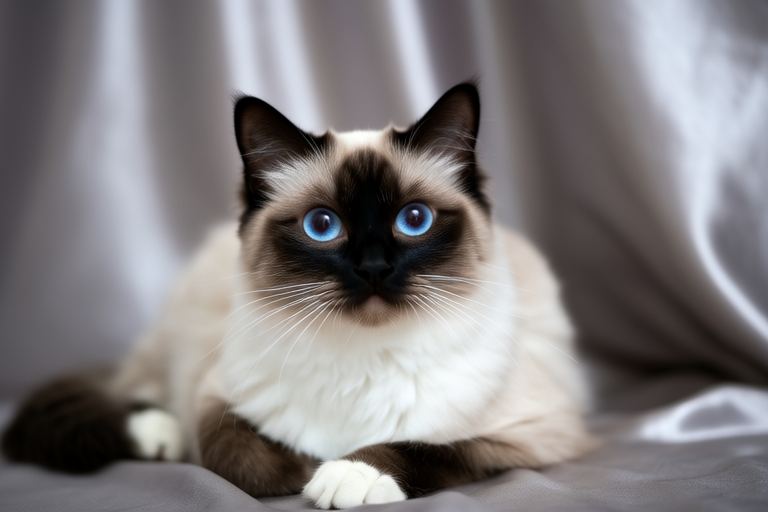
Unraveling the Mystery Behind the Stunning Blue Eyes of Siamese Cats
The Siamese cat is one of the most recognizable breeds in the world, prized for its sleek body, pointy ears, and most notably, its stunning blue eyes. These cats have been captivating human hearts for centuries with their striking appearance. But what makes the Siamese cat’s eyes so uniquely blue? This article delves into the genetic factors behind their mesmerizing eye color, the breed’s fascinating history, and the cultural significance of their iconic blue eyes.
The Unique Physical Characteristics of Siamese Cats
Siamese cats are known for their distinct physical traits that set them apart from other breeds. They possess a medium-sized, muscular body with a graceful, elongated build. Their heads are triangular, and they have large, pointed ears that contribute to their alert and curious demeanor. However, it is their eyes that truly stand out, glowing with a vibrant, piercing blue. The contrast between their darkly pigmented points (ears, face, tail, and paws) and their light-colored bodies adds to their striking appearance.
Their blue eyes are not only aesthetically pleasing but also functionally significant. Siamese cats have almond-shaped eyes that provide excellent peripheral vision, allowing them to see better in low-light conditions. This feature is particularly useful for their nocturnal activities and hunting instincts.
The Genetic Factors Responsible for the Blue Eyes
The blue eyes of Siamese cats are primarily due to a genetic mutation that affects the production of melanin, the pigment responsible for skin and eye color. This mutation is linked to a gene called Siamese, which controls temperature-sensitive pigmentation. In cooler parts of the body, such as the extremities, the gene allows for the production of melanin, resulting in darker points. However, in warmer areas like the face and body, the gene’s effect is less pronounced, leading to lighter fur and blue eyes.
This temperature-sensitive pigmentation is unique to certain breeds, including Siamese, Burmese, and Tonkinese cats. It is because of this mutation that Siamese cats have their characteristic light bodies and dark points. The mutation causes the enzyme tyrosinase, responsible for melanin production, to become inactive at higher temperatures. As a result, the eyes, which are relatively cool compared to the rest of the body, produce blue irises due to the absence of melanin.
Historical Background of Siamese Cats
The Siamese cat has a rich history that dates back several centuries. Originating in Thailand, formerly known as Siam, these cats were highly revered and often kept in royal households. They were considered sacred animals, believed to guard temples and bring good fortune. The first Siamese cats were brought to Europe and America in the late 19th century, where they quickly gained popularity for their striking appearance and charming personalities.
During the early years of their introduction to the Western world, Siamese cats were often depicted in literature and art as mystical creatures. Their blue eyes were seen as a symbol of wisdom and intuition, adding to their allure. Over time, they became one of the most popular cat breeds globally, with their distinctive looks and affectionate nature making them beloved pets.
Inheritance of the Blue Eye Trait
The inheritance of the blue eye trait in Siamese cats follows a simple Mendelian pattern. The Siamese gene is dominant, meaning that if a cat inherits even one copy of the gene, it will exhibit the characteristic light body and dark points. However, the gene does not affect all cats equally; some may have more pronounced points than others depending on the strength of the gene expression.
Recent studies have shed light on the specific genetic mechanisms behind this trait. Researchers have identified the exact location of the Siamese gene on the cat’s genome and have begun to understand how it interacts with other genes to produce the desired phenotype. Understanding these genetic interactions could lead to further advancements in breeding practices and our knowledge of feline genetics.
Cultural Significance and Popularity Among Cat Enthusiasts
The blue eyes of Siamese cats hold significant cultural value, both in their native Thailand and around the world. In Thai folklore, these cats were said to protect the homes of their owners and bring prosperity. Their striking appearance and unique traits made them symbols of elegance and refinement.
In modern times, Siamese cats remain popular among cat enthusiasts for their intelligence, playful nature, and strong bond with their owners. Their blue eyes continue to captivate people, often serving as a focal point when interacting with these beautiful creatures. The breed’s enduring appeal can be attributed to their striking appearance, combined with their engaging personalities and the mystery surrounding their origins.
The blue eyes of Siamese cats are more than just a physical feature; they are a testament to the intricate workings of genetics and the fascinating history of this beloved breed. Whether you are a seasoned cat lover or simply appreciate the beauty of these creatures, the story behind the blue eyes of Siamese cats offers a captivating glimpse into the world of feline genetics and history.
