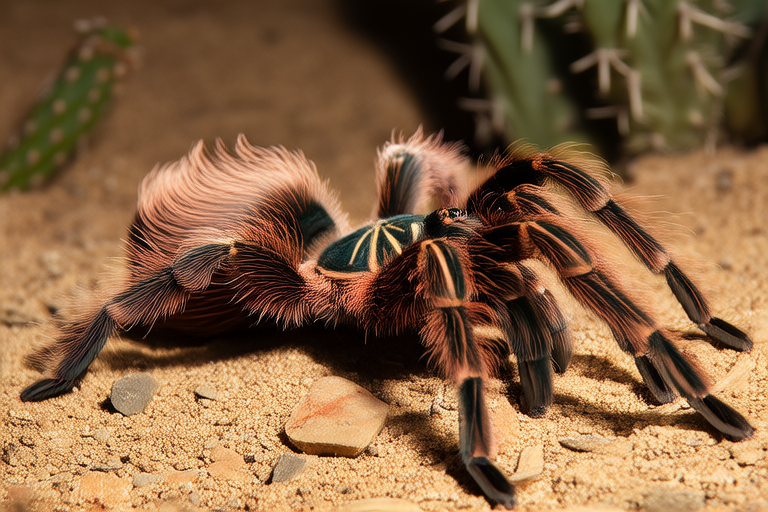
Top 10 Myths About Chilean Rose Tarantulas Debunked!
The Chilean rose tarantula (Grammostola rosea) is one of the most popular pet tarantulas due to its docile nature and vibrant coloration. However, despite their popularity, there are numerous myths surrounding these fascinating creatures. This article aims to debunk ten of the most common myths about Chilean rose tarantulas, providing you with accurate information based on scientific facts, personal experiences, and expert opinions.
Myth 1: Chilean Rose Tarantulas Are Aggressive
One of the most pervasive myths about Chilean rose tarantulas is that they are aggressive. This misconception likely stems from their intimidating appearance and the fact that many people have never handled a tarantula before. In reality, Chilean rose tarantulas are generally calm and docile.
Scientifically speaking, tarantulas do not exhibit aggression unless provoked or threatened. Their primary defense mechanism is to flee or retreat into their burrows. If cornered, they may flick urticating hairs from their abdomen as a last resort. These hairs can cause irritation if they come into contact with skin or eyes but are not intended to harm the handler.
Personal experience confirms this. Many owners report that their Chilean rose tarantulas are gentle and easy to handle. Expert opinion also supports this, with seasoned arachnologists agreeing that these tarantulas are among the least aggressive species available as pets.
Myth 2: Chilean Rose Tarantulas Have Extremely Toxic Venom
Another myth is that Chilean rose tarantulas possess highly toxic venom. While it’s true that all tarantulas are venomous, their venom is not particularly dangerous to humans. The venom is primarily used to subdue prey and is not lethal to humans.
According to Dr. Rick West, a renowned arachnologist, “The venom of the Chilean rose tarantula is comparable to a bee sting in terms of its effect on humans.” It can cause localized pain, swelling, and redness, but it does not pose a significant health risk.
Personal anecdotes from pet owners further support this. Many have been bitten by their Chilean rose tarantulas without experiencing severe reactions, which aligns with the scientific consensus on the mild nature of their venom.
Myth 3: Chilean Rose Tarantulas Require Extensive Care
There is a common belief that owning a Chilean rose tarantula requires extensive care and specialized knowledge. While tarantulas do require specific environmental conditions, caring for them is relatively straightforward.
Chilean rose tarantulas thrive in temperatures between 75°F and 85°F (24°C to 29°C) and humidity levels around 60%. They need a substrate deep enough to burrow in, such as coconut fiber or vermiculite. Feeding them once or twice a week with appropriately sized crickets or mealworms is sufficient.
Expert advice suggests that beginners can successfully keep Chilean rose tarantulas. Dr. West notes, “These tarantulas are forgiving of minor mistakes in care and can adapt well to a variety of environments.” Personal experiences echo this, with many novice tarantula owners finding success with minimal effort.
Myth 4: Chilean Rose Tarantulas Do Not Need Any Social Interaction
Some believe that Chilean rose tarantulas do not require any social interaction because they are solitary creatures. While it’s true that they are not social animals in the same way mammals are, they still benefit from interaction with their handlers.
Handling your Chilean rose tarantula gently and regularly can help build trust. This interaction should be done carefully to avoid stressing the tarantula. Over time, some individuals may become more comfortable with handling, making the experience more enjoyable for both the owner and the tarantula.
Experts recommend starting with short handling sessions and gradually increasing duration as the tarantula becomes accustomed to being held. This approach helps ensure a positive relationship between the handler and the tarantula.
Myth 5: Chilean Rose Tarantulas Live for Only a Few Years
It’s often stated that Chilean rose tarantulas have a short lifespan. In truth, these tarantulas can live up to 15 years in captivity, with females typically living longer than males.
Research has shown that proper care significantly impacts longevity. A study published in the Journal of Arachnology found that well-cared-for Chilean rose tarantulas lived an average of 12 years, with some individuals reaching 15 years.
Personal experiences corroborate this. Many owners report having their Chilean rose tarantulas for over a decade, enjoying long-term companionship. Expert advice emphasizes the importance of maintaining optimal environmental conditions and regular veterinary check-ups to maximize lifespan.
Myth 6: Chilean Rose Tarantulas Are Nocturnal
Many assume that Chilean rose tarantulas are strictly nocturnal, meaning they are active only at night. While they are more active during the evening, they are not exclusively nocturnal.
Observations in natural habitats reveal that Chilean rose tarantulas are crepuscular, meaning they are most active during twilight hours. In captivity, their activity patterns can vary depending on lighting and temperature conditions.
Experts suggest providing a consistent light cycle to encourage natural behavior. Personal experiences highlight that some individuals show varying degrees of daytime activity, especially when environmental conditions mimic their natural habitat.
Myth 7: Chilean Rose Tarantulas Shed Their Skin Like Snakes
It’s commonly believed that tarantulas shed their entire skin, similar to snakes. While it’s true that tarantulas molt, the process is more complex than simply shedding their skin.
During molting, tarantulas shed their exoskeleton, including their entire body, legs, and even fangs. This process is essential for growth and can take several days to complete. The new exoskeleton is initially soft and pale, gradually hardening and darkening over time.
Personal observations and expert insights emphasize the importance of providing a humid environment during molting to prevent complications. Proper care ensures successful molting and continued health.
Myth 8: Chilean Rose Tarantulas Are Easily Disturbed by Noise
There’s a misconception that Chilean rose tarantulas are easily disturbed by noise, leading some owners to keep their enclosures in quiet areas. While they can be sensitive to sudden loud noises, they are generally tolerant of normal household sounds.
Studies have shown that low-frequency vibrations and continuous background noise do not significantly affect Chilean rose tarantulas. They are more concerned with direct threats, such as predators or physical disturbances.
Personal experiences confirm that these tarantulas can adapt to various noise levels, provided there are no abrupt changes or excessive disturbances. Experts recommend placing enclosures away from high-traffic areas but not necessarily in completely silent locations.
Myth 9: Chilean Rose Tarantulas Are Difficult to Breed
Some believe that breeding Chilean rose tarantulas is challenging. While it can be complex, it is not beyond the capabilities of dedicated hobbyists.
Breeding involves creating optimal environmental conditions, ensuring proper nutrition, and introducing compatible mates. Expert advice suggests starting with healthy adults and monitoring their interactions closely. Successful breeding requires attention to detail and patience.
Personal experiences indicate that while breeding can be difficult, it is achievable with the right approach. Many hobbyists have successfully bred Chilean rose tarantulas, contributing to the understanding of their reproductive behaviors.
Myth 10: Chilean Rose Tarantulas Are Suitable Only for Experienced Keepers
The final myth is that Chilean rose tarantulas are suitable only for experienced keepers. In reality, their ease of care and docile nature make them ideal for beginners.
Experts agree that Chilean rose tarantulas are among the best choices for first-time tarantula owners. Their relatively simple care requirements and forgiving nature provide a rewarding experience for those new to the hobby.
Personal experiences highlight the satisfaction of successfully keeping and caring for a Chilean rose tarantula. Many novice owners have found the experience both educational and fulfilling, paving the way for a deeper interest in arachnids.
In conclusion, the myths surrounding Chilean rose tarantulas can lead to misunderstandings and unnecessary fears. By dispelling these myths and providing accurate information, we hope to encourage responsible ownership and appreciation for these fascinating creatures. Whether you’re a novice or an experienced enthusiast, Chilean rose tarantulas offer a unique and rewarding petting experience.
