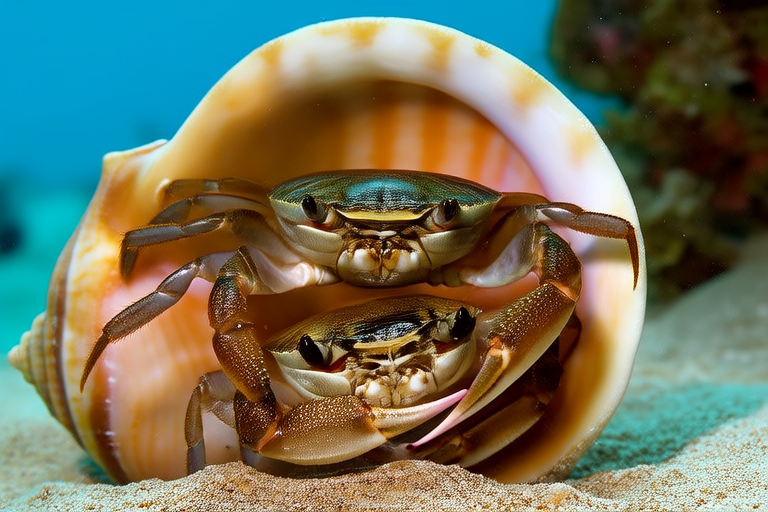
The Cozy Relationship Between Pea Crabs and Their Hosts
In the vast and intricate world of marine ecosystems, there exists a unique and fascinating partnership known as symbiosis. Among the many examples of this interspecies cooperation, the relationship between pea crabs (family Pinnotheridae) and their hosts stands out. These tiny crustaceans have developed a specialized lifestyle, living within the shells of bivalves such as oysters, clams, and even sea anemones or sponges. This article delves into the details of this symbiotic relationship, exploring the benefits and adaptations for both parties involved, along with the ecological significance of this mutualism.
Introduction to Pea Crabs and Their Habitats
Pea crabs are small, delicate creatures named for their resemblance to a pea in size. They belong to the family Pinnotheridae, which comprises over 80 species distributed worldwide. These crabs have adapted to live inside the mantle cavity of their hosts, typically bivalve mollusks. The hosts they choose vary widely, from commercially important species like oysters and mussels to less common ones like sea anemones and sponges. The pea crab’s choice of host is crucial for its survival, as it provides protection, food, and a stable environment.
The Symbiotic Relationship: A Mutualistic Bond
The relationship between pea crabs and their hosts can be classified as mutualism, where both species benefit from each other. For the pea crab, the host serves as a protective shell, offering shelter from predators and harsh environmental conditions. Inside the host, the pea crab finds a safe haven where it can molt and grow without the risk of predation. Additionally, the host provides a constant supply of food through its filtration system, allowing the pea crab to consume the detritus and microorganisms that the host filters from the water.
For the host, the presence of pea crabs can also offer advantages. Studies have shown that the presence of pea crabs can deter parasitic infections, as the crabs may consume parasites before they can infect the host. Moreover, the movement of the pea crabs within the host can stimulate water flow, enhancing the host’s respiration and feeding efficiency. This mutualistic relationship underscores the complexity and interconnectedness of marine ecosystems.
Adaptations for Survival
The pea crabs have evolved several remarkable adaptations to thrive within their hosts. Their flattened bodies allow them to fit snugly within the narrow spaces of the bivalve’s mantle cavity. Furthermore, they possess elongated mouthparts that enable them to reach the food particles filtered by the host. These adaptations ensure that the pea crabs can efficiently extract nutrients from the water, making the most of their protected environment.
Another significant adaptation is the pea crabs’ ability to synchronize their molting cycles with those of their hosts. By doing so, they avoid periods when the host’s tissues are most vulnerable and susceptible to infection. This synchronization ensures that both the pea crab and the host remain healthy throughout their lifespans.
Ecological Significance
The symbiotic relationship between pea crabs and their hosts plays a crucial role in maintaining the balance of marine ecosystems. As filter feeders, both the pea crabs and their hosts contribute to the purification of water by removing particulate matter and microorganisms. This process helps maintain the clarity and health of aquatic environments, benefiting numerous other species that rely on clean water for survival.
Additionally, the presence of pea crabs in commercial bivalve populations has economic implications. While they can sometimes reduce the marketability of these organisms due to their presence, they also provide valuable insights into the health of marine ecosystems. Monitoring the prevalence and distribution of pea crabs can serve as an indicator of the overall condition of the environment, helping researchers and conservationists make informed decisions.
Recent Studies and Discoveries
Recent research has shed new light on the complexities of this symbiotic relationship. One study published in the journal Marine Biology explored the genetic diversity of pea crabs within different host species. The findings revealed that pea crabs exhibit high levels of genetic variation, indicating a diverse array of adaptations to various host environments. This genetic diversity suggests that pea crabs are highly adaptable to changing conditions, which could be advantageous in the face of climate change and environmental disturbances.
Another area of interest is the impact of human activities on this relationship. Pollution, habitat destruction, and overfishing can disrupt the delicate balance between pea crabs and their hosts. Researchers are now investigating how these anthropogenic factors affect the symbiotic relationship and what measures can be taken to protect both species. Understanding these interactions is vital for the sustainable management of marine resources.
Conclusion
The symbiotic relationship between pea crabs and their hosts exemplifies the intricate and interconnected nature of marine ecosystems. Through their mutualistic bond, both species benefit, contributing to the overall health and stability of their environment. The adaptations of pea crabs for life within their hosts highlight the remarkable evolutionary processes that shape life in the oceans. As we continue to explore and understand these relationships, it becomes increasingly clear that the preservation of these ecosystems is essential for the well-being of all marine life, including humans who depend on the ocean for sustenance and inspiration.
