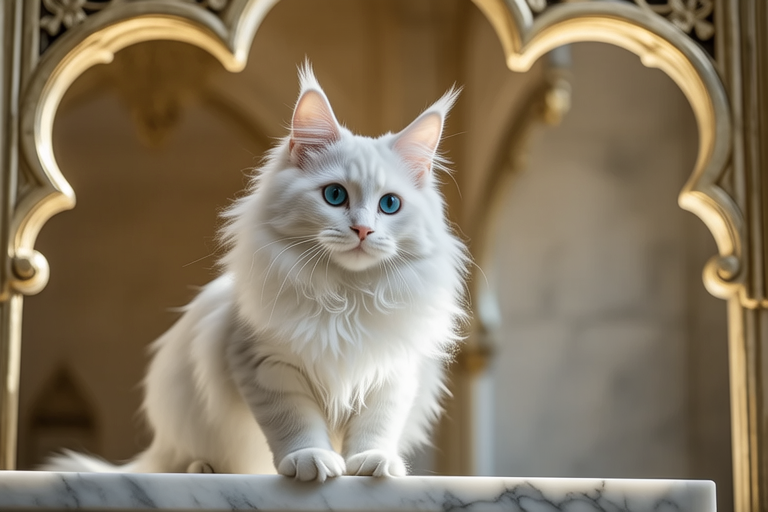
From Ottoman Royalty to Modern Charm: Discovering the Turkish Angora
The Turkish Angora, with its regal heritage and enchanting presence, has captivated the hearts of many over centuries. This elegant feline breed, originally hailing from Ankara, Turkey, holds a significant place in history, especially within the Ottoman Empire. The Turkish Angora was not just a domesticated animal but also a cherished symbol of nobility and grace.
A Royal Legacy
During the Ottoman era, the Turkish Angora was often kept as a companion to the elite and royalty. The breed’s refined demeanor and striking appearance made it a fitting pet for the palaces of the sultans. These cats were admired for their elegance and poise, qualities that mirrored the grandeur of the empire itself. They were considered more than mere pets; they were symbols of luxury and refinement, often presented as gifts to foreign dignitaries and allies.
One notable story involves a Turkish Angora named Selim III, who was gifted to Catherine the Great of Russia in the late 18th century. This cat became a favorite at the Russian court, further enhancing the breed’s reputation. The Turkish Angora’s association with royalty ensured its place in the annals of feline history.
Physical Characteristics
The Turkish Angora is distinguished by its slender yet muscular build, giving it a graceful and agile appearance. Their long, silky coats come in a variety of colors, from pure white to black and tabby patterns, though white is the most common and iconic color. The breed’s most striking feature, however, are its large, expressive eyes, typically a striking shade of blue, which add to their ethereal beauty.
Their coats are known for their softness and sheen, requiring minimal grooming due to their natural self-cleaning habits. This low-maintenance trait makes them ideal companions for those seeking a beautiful, yet practical pet. Despite their delicate appearance, Turkish Angoras are robust and active, often engaging in playful antics that showcase their agility and intelligence.
Transition to Global Popularity
As the Ottoman Empire declined and the modern Republic of Turkey emerged, the Turkish Angora began its journey from a symbol of royalty to a beloved pet across the globe. The breed was introduced to Europe and North America through various means, including diplomatic gifts and private imports. In the mid-20th century, the Turkish Angora gained recognition in cat shows and breeding programs, solidifying its status as a distinct and desirable breed.
One famous Turkish Angora was named “Turkish Delight,” a cat that won numerous awards at cat shows in the United States during the 1970s. Her wins helped bring attention to the breed, encouraging more people to adopt Turkish Angoras. This cat’s success story highlights the breed’s adaptability and appeal beyond its historical roots.
Unique Traits
What sets the Turkish Angora apart from other breeds is its combination of elegance and playfulness. These cats are known for their affectionate nature towards their owners, forming strong bonds with humans. They are highly intelligent and enjoy interactive play, making them excellent companions for families and individuals alike.
Turkish Angoras are also known for their vocal communication, often chirping or trilling to express their needs or simply to engage with their surroundings. This communicative behavior adds a delightful dimension to living with these cats, as they can be quite talkative and engaging.
Enduring Appeal
The Turkish Angora’s enduring appeal lies in its unique blend of historical significance and modern charm. As a breed, it continues to captivate cat enthusiasts with its graceful presence, striking appearance, and engaging personality. Whether in the form of a cherished family pet or a symbol of cultural heritage, the Turkish Angora remains a timeless favorite.
Today, Turkish Angoras are found in households worldwide, cherished for their loyalty, intelligence, and beauty. Their transition from the palaces of the Ottoman Empire to the living rooms of everyday people underscores their versatility and universal appeal. The breed’s history and character ensure that it will continue to charm cat lovers for generations to come.
