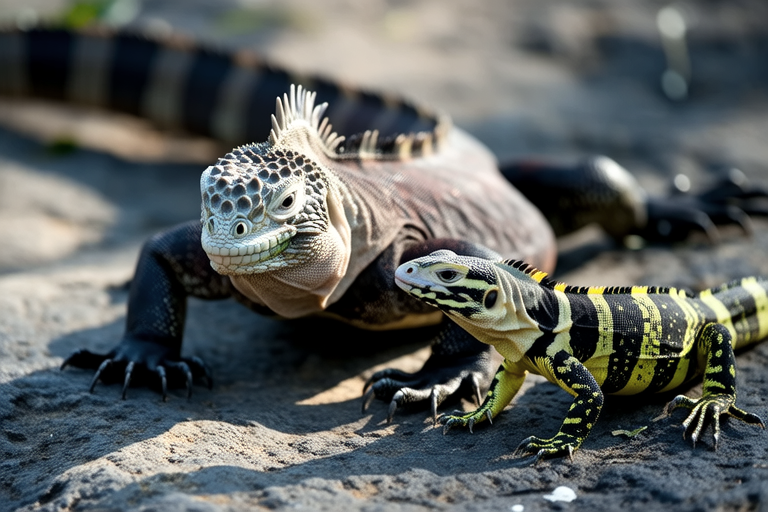
How to Differentiate Between Young and Adult Water Monitors Easily
Water monitors (Varanus salvator) are one of the largest lizard species in the world, native to Southeast Asia. They are known for their impressive size, agility, and intelligence. However, distinguishing between young and adult water monitors can be challenging due to their gradual growth and subtle changes in appearance over time. This guide will provide you with detailed insights into the physical characteristics, behavior, and growth patterns that help differentiate young from adult water monitors.
Introduction to Water Monitors
Water monitors are semi-aquatic lizards that can grow up to 3 meters in length. They are found in a variety of habitats, from dense tropical forests to coastal mangroves, and even urban areas. These reptiles are excellent swimmers and climbers, making them well-adapted to their diverse environments. Their diet consists mainly of fish, insects, small mammals, and birds, but they are also known to scavenge carrion when necessary.
Physical Characteristics
Size
The most obvious difference between young and adult water monitors is their size. Juvenile water monitors typically range from 10 to 30 cm in length, while adults can reach lengths of up to 3 meters. It’s important to note that the growth rate of these lizards can vary depending on factors such as availability of food, environmental conditions, and genetic predisposition. However, as a general rule, a water monitor that is less than 60 cm in length is likely to be a juvenile.
Coloration
The coloration of water monitors can change significantly as they mature. Young water monitors usually have a brighter, more vivid coloration with patterns that are more distinct and contrasting. They often exhibit a pattern of dark spots or bands on a lighter background, which helps them blend into their surroundings and avoid predators. As they age, the contrast between the colors becomes less pronounced, and the overall coloration tends to become darker and more uniform. Adult water monitors often display a mottled brown or grayish-black color, which provides better camouflage in their environment.
Tail Thickness
The tail of a water monitor plays a crucial role in swimming and balance. In juveniles, the tail is relatively thin and delicate compared to the body, providing agility and maneuverability. As they grow, the tail thickens proportionally to the body, becoming a powerful weapon used for defense and swimming. The tail of an adult water monitor is robust and muscular, capable of delivering strong strikes. This difference in tail thickness is a reliable indicator of the lizard’s age and stage of development.
Head Shape
The head shape of water monitors also changes as they mature. Juveniles have smaller, more rounded heads with relatively large eyes and nostrils. This head shape allows them to see and smell their prey effectively, which is essential for survival in their early stages of life. As they grow, the head becomes larger and more elongated, with a broader snout and smaller eyes relative to the size of the head. This change in head shape is associated with the increased need for strength and power in capturing larger prey.
Other Notable Differences
Aside from the aforementioned physical characteristics, there are several other features that can help distinguish young from adult water monitors:
- Eye Size and Position: The eyes of young water monitors are proportionally larger and positioned higher on the head compared to adults. This allows them to have a wider field of vision, which is beneficial for detecting threats and locating prey.
- Teeth: The teeth of young water monitors are sharp and numerous, adapted for catching and holding onto small prey items. As they grow, their teeth become fewer but larger, suited for tackling larger prey.
- Scales: The scales of young water monitors are smoother and more evenly spaced, giving them a sleek appearance. With age, the scales become rougher and more pronounced, especially around the tail and limbs, providing better protection against predators and environmental hazards.
Behavioral Changes
Water monitors exhibit distinct behavioral changes as they transition from juveniles to adults. Understanding these behaviors can further assist in identifying the age of the lizard.
Hunting Techniques
Young water monitors rely heavily on speed and agility to catch their prey. They are fast runners and adept climbers, often chasing down insects, small amphibians, and fish. Their hunting techniques involve quick bursts of movement and precise strikes. As they grow, water monitors develop the strength and endurance to pursue larger prey, such as rodents, birds, and even snakes. They may also start scavenging for carrion, which is a more energy-efficient way of obtaining food.
Defensive Strategies
Young water monitors are more vulnerable to predation and rely on evasive maneuvers and hiding to avoid danger. They may retreat to burrows, climb trees, or dive into water to escape potential threats. Adult water monitors, on the other hand, are more confident and confrontational. They are capable of defending themselves using their powerful tails and sharp claws. They may also hiss loudly and open their mouths to intimidate predators.
Social Behavior
Water monitors are generally solitary creatures, but they can exhibit social behaviors during certain times of the year, particularly during the breeding season. Juveniles tend to stay close to their birthplace until they are large enough to venture out on their own. Adults may come together temporarily to mate, but they quickly disperse afterward. Observing the presence of multiple water monitors in an area can give you an indication of whether you are dealing with juveniles or adults.
Growth Patterns
The growth patterns of water monitors are influenced by various factors, including genetics, nutrition, and environmental conditions. Understanding these factors can help you predict the age of a water monitor based on its size and appearance.
Genetics
Just like humans, water monitors inherit traits from their parents, including their potential size and growth rate. Some individuals may grow faster or slower than others, depending on their genetic makeup. If you observe a group of water monitors in the wild, you might notice that some are significantly larger or smaller than their peers at the same age. This variation can make it difficult to determine the exact age of an individual lizard based solely on size.
Nutrition
Adequate nutrition is essential for the healthy growth of water monitors. Juveniles require a high-protein diet to support rapid growth, while adults need a balanced diet to maintain their size and strength. In the wild, access to food can vary depending on the season and location. For example, water monitors living near rivers or lakes may have more opportunities to catch fish, which can contribute to faster growth. Conversely, those in drier areas may experience slower growth due to limited food resources.
Environmental Conditions
The environmental conditions in which water monitors live can also affect their growth. Factors such as temperature, humidity, and availability of shelter play a significant role in determining how quickly a lizard grows. Warmer temperatures generally promote faster metabolism and growth, while cooler temperatures can slow down the process. Similarly, access to adequate shelter can protect young water monitors from predators, allowing them to focus on growing rather than constantly seeking safety.
Practical Tips for Identification
Identifying the age of a water monitor in the wild can be challenging, but with practice and attention to detail, you can become proficient at distinguishing juveniles from adults. Here are some practical tips to help you in your observations:
Observe the Environment
The habitat in which you find a water monitor can provide clues about its age. Juveniles are more likely to be found in areas with abundant cover, such as dense vegetation or rocky crevices, where they can hide from predators. Adults, on the other hand, are more comfortable in open spaces, such as riverbanks or fields, where they can hunt for larger prey. Pay attention to the type of environment in which you spot the lizard, as this can give you valuable information about its age.
Use Binoculars
When observing water monitors in the wild, it can be difficult to get close enough to examine them closely. Using binoculars can help you identify key physical characteristics without disturbing the lizard. Look for differences in tail thickness, head shape, and coloration. You can also observe their movements and behavior, noting any signs of agility or strength that might indicate their age.
Consult Field Guides
If you’re unsure about the age of a water monitor you’ve encountered, consult a field guide or seek advice from experienced reptile enthusiasts. Field guides often include detailed descriptions and photographs of different age groups, helping you to compare what you’ve observed with known characteristics. Additionally, joining online forums or local reptile clubs can connect you with knowledgeable individuals who can offer guidance and share their experiences.
Conclusion
Differentiating between young and adult water monitors requires careful observation and understanding of their physical characteristics, behavior, and growth patterns. By paying attention to size, coloration, tail thickness, head shape, and other notable differences, you can gain valuable insights into the age of these remarkable reptiles. Whether you’re a beginner or an experienced enthusiast, learning to identify young from adult water monitors will enhance your appreciation for these fascinating creatures and deepen your connection with nature.
