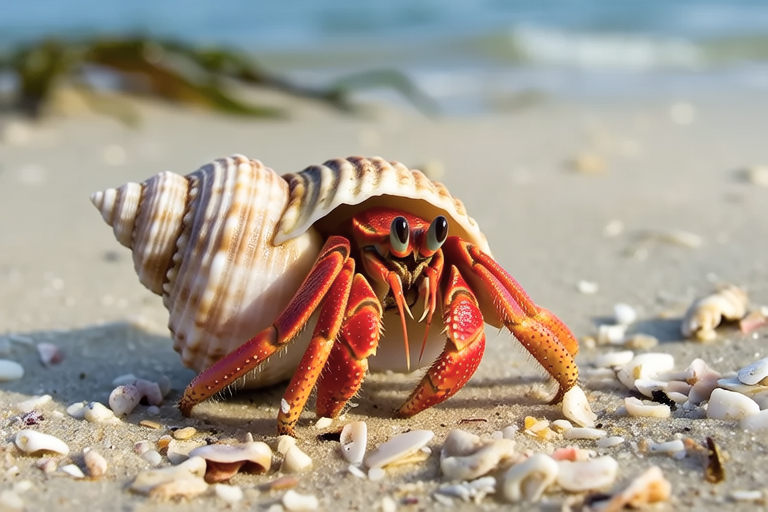
The Secret World of Hermit Crabs: Fascinating Facts and Care Tips
Hermit crabs are among the most unique creatures on Earth, known for their remarkable lifestyle and intriguing behaviors. Unlike their namesake, hermit crabs are not solitary animals; rather, they live in colonies and exhibit complex social structures. These small crustaceans have adapted to live in discarded shells, a behavior that has fascinated humans for centuries. Their world is full of secrets waiting to be uncovered, from their natural habitats to their fascinating molting process and shell-changing habits.
Natural Habitat
Native to tropical and subtropical regions, hermit crabs thrive in environments such as sandy beaches, mangroves, and coral reefs. They prefer areas with high humidity and temperatures ranging between 75°F and 85°F (24°C and 29°C). In the wild, hermit crabs can be found in coastal areas where they burrow into the sand during low tide and venture out at high tide to forage for food. Their natural habitat provides them with an abundance of shells and other resources essential for their survival.
Diet
Hermit crabs are omnivorous scavengers, feeding on a variety of foods including algae, decaying plant matter, and small marine organisms. In captivity, it’s important to provide a balanced diet that mimics their natural food sources. A good diet for pet hermit crabs includes a mix of fruits, vegetables, and protein-rich foods like fish flakes or pellets. It’s also crucial to offer a calcium source, such as crushed eggshells or cuttlebone, to support their exoskeleton development.
Behavior and Communication
Hermit crabs are highly social creatures that communicate through a series of chirps, clicks, and vibrations. These sounds serve various purposes, from attracting mates to warning others of potential threats. In captivity, hermit crabs often engage in communal activities, such as gathering around food or exploring new objects together. Their behavior is influenced by environmental factors, including temperature, humidity, and the presence of other hermit crabs.
Fascinating Facts
Molting Process
One of the most fascinating aspects of hermit crab biology is their molting process. During this time, hermit crabs shed their old exoskeleton to make room for a new one. This process can take several weeks, during which they become vulnerable and may seek out a safe place to molt. It’s essential to provide hiding spots and soft substrate, such as coconut fiber or moss, to help facilitate the molting process.
Shell Changing Habits
Hermit crabs are constantly searching for new shells to call home. As they grow, they outgrow their current shells and must find larger ones to accommodate their expanding bodies. This can lead to intense competition among hermit crabs, especially in captivity. To prevent overcrowding and stress, it’s important to provide a variety of shells in different sizes and shapes for your hermit crabs to choose from.
Social Interactions
In addition to their unique molting and shell-changing behaviors, hermit crabs are known for their social interactions. They form close bonds with their tank mates and engage in activities such as grooming and playing. These behaviors are essential for maintaining social harmony within hermit crab colonies. Providing ample space and enrichment opportunities can help promote positive social interactions and reduce stress among captive hermit crabs.
Care Tips for Pet Owners
Housing
When setting up a habitat for hermit crabs, it’s important to provide a spacious enclosure that allows for movement and exploration. A 10-gallon tank is suitable for a small group of hermit crabs, but larger tanks are recommended for larger groups or more active hermit crabs. The enclosure should include a layer of substrate, such as sand or coconut fiber, that is deep enough for burrowing. Additionally, it’s important to provide plenty of hiding spots, climbing structures, and shells for your hermit crabs to explore and interact with.
Temperature and Humidity
Hermit crabs require specific environmental conditions to thrive. Maintaining a consistent temperature between 75°F and 85°F (24°C and 29°C) is crucial for their health and well-being. Humidity levels should be kept between 70% and 80%, which can be achieved by misting the enclosure daily and providing a water dish. It’s also important to avoid sudden temperature fluctuations, as these can stress hermit crabs and potentially lead to health issues.
Diet
A balanced diet is essential for the health and longevity of hermit crabs. In addition to providing a variety of fruits, vegetables, and protein-rich foods, it’s important to offer a calcium source to support exoskeleton development. Freshwater and saltwater dishes should also be provided, as hermit crabs require both types of water for hydration and shell maintenance. It’s recommended to change the water daily to prevent bacterial growth and ensure a clean environment.
Tank Mates
While hermit crabs are social creatures, it’s important to carefully consider their tank mates. Some species of hermit crabs are compatible with each other, while others may compete for resources or engage in aggressive behavior. Research the specific species you plan to keep and consult with experts to determine the best tank mates for your hermit crabs. It’s also important to monitor interactions closely and intervene if necessary to prevent conflicts.
Ensuring Well-Being in Captivity
Ensuring the well-being of hermit crabs in captivity requires careful consideration of ethical considerations and enrichment activities. Ethical considerations include providing a spacious and stimulating environment, avoiding overcrowding, and ensuring proper nutrition and hydration. Enrichment activities, such as offering new toys or rearranging the enclosure, can help stimulate mental and physical activity and prevent boredom. Regular monitoring and care are essential to maintain the health and happiness of hermit crabs in captivity.
