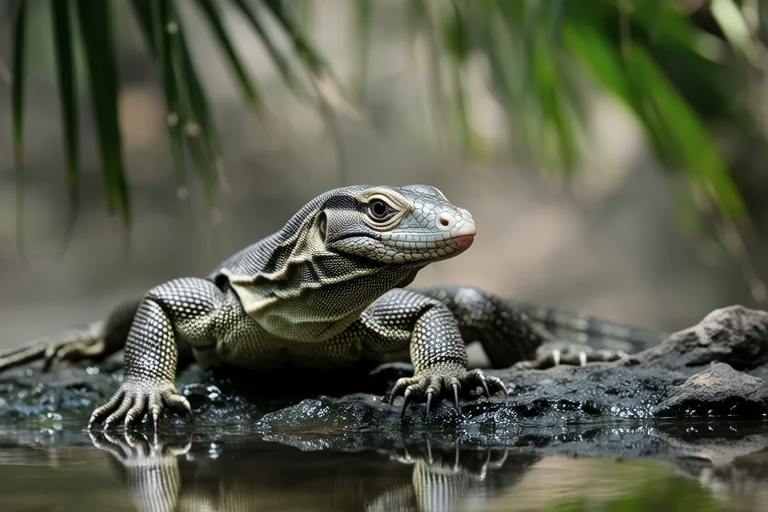
Unleashing the Secrets Behind the Enigmatic Water Monitor Behavior
The water monitor lizard (Varanus salvator) is a fascinating creature that has captured the imagination of scientists and nature enthusiasts alike. Found across Southeast Asia, this reptile is one of the largest lizards in the world, with some individuals reaching lengths of up to three meters. Known for its agility both on land and in water, the water monitor lizard is a versatile predator that plays a crucial role in maintaining the ecological balance of its habitat.
Habitat and Physical Characteristics
The water monitor lizard thrives in diverse environments ranging from mangrove swamps to freshwater streams, rice paddies, and even urban areas. Its adaptability allows it to live in regions with varying climates, from tropical forests to more temperate zones. The lizard’s body is streamlined for movement through water, featuring powerful limbs, sharp claws, and a long tail used for swimming. Its scales provide excellent protection against predators and harsh environmental conditions. Water monitors have keen eyesight and a highly developed sense of smell, which they use to locate prey and navigate their complex habitats.
Diet and Hunting Techniques
Water monitors are opportunistic feeders, with a diet that includes a wide range of animals, from small insects and fish to larger prey like birds and mammals. Their hunting techniques are as varied as their diet. They often ambush their prey, striking with lightning speed. In aquatic environments, water monitors use their strong tails to propel themselves through the water, chasing down fish or frogs. On land, they employ stealth, sneaking up on unsuspecting prey before delivering a swift bite. Their teeth are designed to hold onto struggling prey, ensuring that nothing escapes once caught.
Unique behaviors have been observed in their natural environment, particularly in terms of how they interact with their surroundings. For example, water monitors have been seen using tools to access food. In one instance, a monitor was observed using sticks to dig out insects from crevices, demonstrating a level of problem-solving that is rare among reptiles. This behavior underscores the intelligence and adaptability of these creatures, making them a subject of interest for ethologists studying animal cognition.
Social Interactions
Despite being largely solitary, water monitors exhibit complex social behaviors when they do interact. Communication between individuals primarily occurs through visual signals and chemical cues. Males, in particular, engage in ritualized displays during the breeding season to establish dominance. These displays involve puffing up their bodies, hissing, and sometimes engaging in physical confrontations. There is evidence of a hierarchy among males, with dominant individuals having greater access to mates.
Females also communicate, though less aggressively. They signal readiness to mate through specific postures and chemical markers left on their skin. After mating, females lay eggs in nests they carefully construct, usually in termite mounds or burrows. The incubation period lasts several months, during which time the female may guard the nest site, although this behavior is not well understood.
Challenges in the Wild
Water monitors face numerous challenges in the wild, primarily from predation and human activities. Natural predators include large snakes, crocodilians, and birds of prey. However, the most significant threat comes from humans. Habitat destruction due to deforestation and agricultural expansion reduces the available space for water monitors to thrive. Additionally, they are hunted for their meat and skins, which are valuable in certain markets. Pollution and climate change further exacerbate these issues, affecting the quality of their habitat and the availability of prey.
Conservation Efforts and Ecological Balance
Understanding the behavior of water monitors is crucial for their conservation. By studying their social interactions, feeding habits, and environmental preferences, researchers can develop strategies to protect these animals and their habitats. Conservation efforts often focus on preserving critical habitats and reducing poaching. Educating local communities about the importance of water monitors in maintaining ecological balance is also vital.
Water monitors play a pivotal role in their ecosystems by controlling populations of smaller animals and contributing to nutrient cycling. Their presence indicates a healthy environment, and their absence could lead to imbalances that affect entire food chains. Therefore, conserving water monitors is not just about protecting an individual species but about safeguarding the broader ecosystem.
In conclusion, the water monitor lizard is a remarkable creature whose behaviors reveal much about its adaptability and intelligence. From their impressive hunting techniques to their intricate social structures, these lizards continue to captivate and inspire those who study them. As we strive to understand and protect these enigmatic creatures, we not only preserve a vital part of our natural heritage but also ensure the health and balance of the ecosystems they inhabit.
