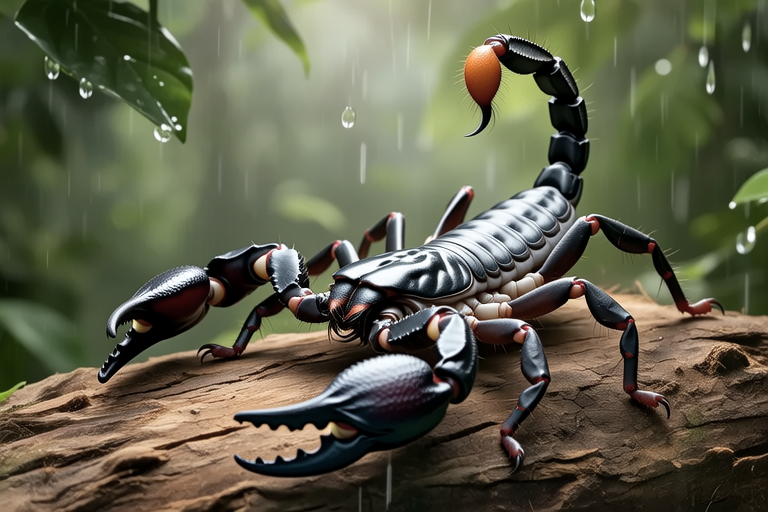
The Mysterious World of Heterometrus Spinifer: A Scorpion’s Tale
In the dense jungles and scrublands of Southeast Asia, a peculiar inhabitant skulks beneath the cover of night. The Heterometrus spinifer, also known as the giant forest scorpion, is a marvel of evolution, perfectly adapted to its environment. This species, with its formidable size and unique characteristics, plays an essential role in its ecosystem and has intrigued both scientists and locals alike.
Unique Behaviors and Habitat Preferences
The Heterometrus spinifer thrives in the humid, dark underbrush of tropical forests, where it hides during daylight hours and emerges at dusk to hunt. With its powerful pincers and venomous stinger, it preys on insects, spiders, and even small vertebrates like frogs. Unlike many other scorpions, which rely solely on their claws for subduing prey, the Heterometrus spinifer uses both its pincers and venomous sting, making it a formidable predator.
One of the most fascinating aspects of this scorpion’s behavior is its ability to adapt to different environments. In areas where human activity is prevalent, such as rural villages or agricultural fields, the Heterometrus spinifer has been observed living in close proximity to humans without causing significant harm. This coexistence is a testament to the scorpion’s remarkable adaptability.
Close Encounters and Personal Stories
Many people have shared stories of unexpected encounters with the Heterometrus spinifer. One such story comes from a researcher named Dr. Lin Mei, who was studying the biodiversity of a remote jungle in Thailand. While setting up her equipment one evening, she noticed a large shadow moving across the ground. To her surprise, it was a Heterometrus spinifer scurrying towards her campsite. Instead of fleeing, the scorpion paused just outside her tent, as if assessing the situation. Dr. Mei later realized that the scorpion had likely mistaken her presence for another potential threat, rather than seeing her as a danger itself.
This encounter highlights the complex interactions between humans and wildlife. It demonstrates that while scorpions may seem intimidating, they often exhibit caution and restraint when encountering unfamiliar stimuli. Such close encounters can help foster a greater appreciation for these creatures and encourage conservation efforts.
Interactions with Humans and Myths Surrounding the Species
Throughout history, scorpions have been surrounded by myths and misconceptions. The Heterometrus spinifer is no exception. In some cultures, it is believed that the sting of this scorpion can cause severe illness or death. However, scientific research has shown that while the venom of the Heterometrus spinifer is potent, it is rarely life-threatening to humans. Most stings result in localized pain and swelling, similar to a bee sting.
Despite these myths, the Heterometrus spinifer has become a symbol of resilience and adaptability in many Southeast Asian communities. Its image is often used in local art and folklore, representing strength and survival in the face of adversity. This cultural significance underscores the importance of preserving the natural habitats where these scorpions live.
Scientific Insights and Conservation Efforts
Recent studies have revealed that the venom of the Heterometrus spinifer contains compounds that could be beneficial in medical research. Scientists are exploring the potential of these compounds for developing new treatments for diseases such as cancer and autoimmune disorders. This discovery not only highlights the value of biodiversity but also emphasizes the need for conservation efforts to protect the habitats of these scorpions.
Conservationists are working to raise awareness about the importance of preserving the ecosystems where the Heterometrus spinifer thrives. By promoting sustainable land use practices and reducing deforestation, we can help ensure that future generations will continue to benefit from the unique adaptations and potential medical applications of this remarkable species.
The Role of the Heterometrus Spinifer in Ecosystems
The Heterometrus spinifer plays a crucial role in maintaining the balance of its ecosystem. As a top predator, it helps control populations of insects and other small animals, preventing overpopulation and ensuring a healthy balance within the food chain. Additionally, the burrows created by these scorpions provide shelter for other species, contributing to the overall biodiversity of the area.
Understanding the intricate web of relationships within an ecosystem is essential for effective conservation. By recognizing the vital role played by the Heterometrus spinifer, we can better appreciate the interconnectedness of all living things and work towards protecting these fragile ecosystems for future generations.
Conclusion
The Heterometrus spinifer is a remarkable species that continues to captivate and inspire those who study it. From its unique behaviors and habitat preferences to its interactions with humans and cultural significance, this scorpion offers a window into the wonders of the natural world. By fostering a deeper understanding and appreciation for these creatures, we can contribute to their conservation and help preserve the rich biodiversity of our planet.
